GEO for Hotels
Get your property recommended when travelers ask ChatGPT, Gemini, or Google AI Mode where to stay. A hotel stay is a considered purchase, and travelers increasingly hand that comparison to AI. According to Adobe Analytics, AI-referred traffic to US travel sites rose 539% year over year during the 2025 holiday season. OmniGro shows you how AI recommends your hotel today, then fixes what's missing.
See how AI recommends your hotel

Hotel booking is where AI recommendations decide the outcome
A hotel stay is one of the most considered purchases a person makes: expensive, infrequent, and hard to undo once booked. High-consideration decisions like this are exactly where an AI's recommendation decides the outcome, not a page of search results.
When a traveler asks ChatGPT or Google AI Mode to compare hotels, the AI hands back a shortlist, not ten blue links. A hotel absent from that shortlist loses the booking before the traveler ever reaches a search page.
What a hotel choice actually depends on
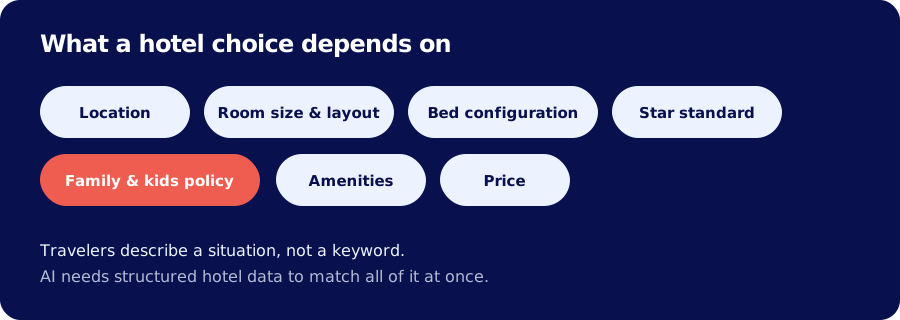
Choosing a hotel is rarely a single decision. It depends on location, room size and layout, bed configuration, star standard, family and kids policies, amenities, and price, often all at once. Travelers rarely search one keyword. They describe a situation, like a family suite downtown with a pool, or a quiet business hotel near the conference center. AI answers that kind of query well only when a hotel's own data spells out those attributes in detail. This is the hotel version of catalog and attribute optimization, the structured data that accurate AI hotel recommendations depend on.
Trip planning is often the first real use of AI
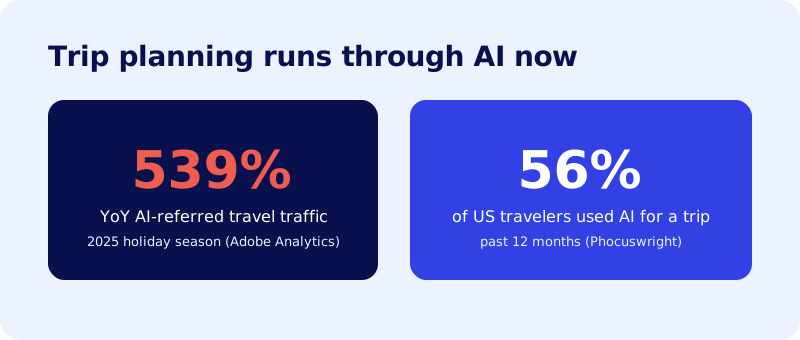
For many travelers, planning a trip is their first real use of AI: comparing destinations, building an itinerary, shortlisting where to stay. According to Phocuswright's "AI Surge" report, 56% of US leisure travelers used AI for at least one trip stage in the past 12 months. That is more than double 2024's level, which Phocuswright calls the fastest shift it has tracked in over a decade. A hotel that AI does not know about at this stage never enters the traveler's consideration set to begin with.
Most hotels don't know their AI status
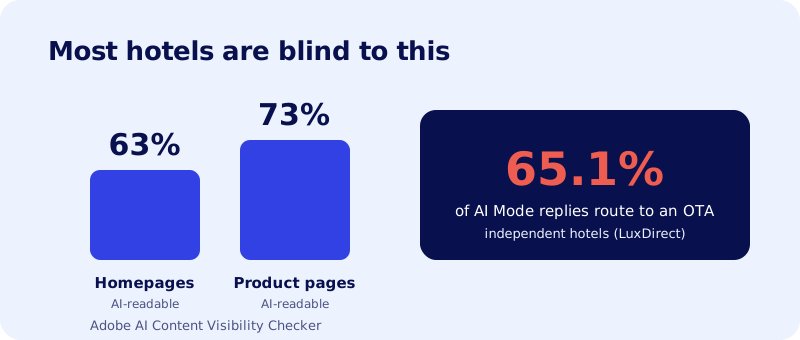
Most hotels have no idea whether AI engines recommend them, or send the booking to a competitor instead. According to Adobe's AI Content Visibility Checker, just 63% of hotel homepages and 73% of hotel product pages are readable to AI. More than a third of hotel homepages stay invisible to it, and roughly a quarter of product pages do too. Even a hotel that does get recommended is not guaranteed the booking, and independent hotels without direct booking integration face a steeper problem. LuxDirect's research found that Google AI Mode routed 65.1% of their responses to OTA pages instead of the hotel's own site. OmniGro closes the visibility gap. We audit how AI sees your hotel, structure your data so AI can read it, and track citations so you know where you stand.
What GEO for hotels includes
It's getting AI to understand your offering so well that when a traveler describes the exact constraints you satisfy, your hotel is the top recommendation. New to the term? See what generative engine optimization is. OmniGro built this discipline for ecommerce catalogs, and a hotel's rooms, rates, and amenities are the same kind of structured-data problem. Travel and hospitality is one of the service categories OmniGro covers, delivered here as five connected pieces built specifically for hotels.
See where you stand before you spend anything.
OmniGro's Brand Visibility Audit runs 200+ structured prompts across ChatGPT, Claude, and Gemini to see how each engine describes and ranks your hotel today. You get an accuracy score and a prioritized list of what is actually blocking a citation.
Know the moment AI mentions you, or a competitor instead.
OmniGro's AI Citation Tracking monitors ChatGPT, Claude, Gemini, and Perplexity, alerting you the moment your hotel earns a citation or loses one to a competitor. Cited sources shift fast: according to Profound, 40 to 60% of cited domains change every month, so a one-time check tells you almost nothing.
Make sure AI has one consistent story about your hotel.
Entity Consistency Monitoring checks how your hotel's name, star rating, and location are described everywhere AI reads from: your website, OTAs, review sites, and directories. A hotel listed as three stars in one place and boutique in another confuses the model and costs you the citation.
Optimize where buyers already look, not just your own site.
OmniGro also strengthens your listings on the OTAs, directories, and review platforms AI actually reads from, adding the details, tags, and attributes that are missing. A complete listing helps you surface for the exact high-intent search a traveler runs, like a family suite with a pool. It also reinforces the same credible, consistent picture AI needs to trust a citation.
Give AI the structured data it needs to trust you.
Schema & Structured Data implementation puts your room types, rates, availability, and policies into a format AI can parse, instead of guessing from marketing copy. Missing or inconsistent markup is one of the most common reasons a hotel that looks great never shows up in an AI answer.
How it works
OmniGro runs GEO for hotels in four steps, from a free assessment to measured results.
Free assessment
We review your hotel and show where you stand across the major AI engines today.
Audit & plan
We run the Brand Visibility Audit, map your entity and structured-data gaps, and build a plan specific to your property.
Fix & monitor
We implement schema, fix entity inconsistencies, and turn on citation tracking so you see every change.
Measured results
You get a full report on citations, AI visibility, and where travelers are finding you.
See the full how it works.
See how AI recommends your hotelGEO for hotels FAQs
OmniGro runs as a managed service priced from $2,000 to $5,000 a month, based on property size and scope. A specialist consultant alone often costs $8,000 to $10,000 before any execution, so the managed model delivers the outcome for less.
A hotel's AI status does not stay the same on its own. The properties that check now start building citations while competitors are still guessing.
See how AI recommends your hotel
Get a free AI visibility assessment and see exactly where your hotel stands across ChatGPT, Gemini, Perplexity, and Google AI Mode.
See how AI recommends your hotel