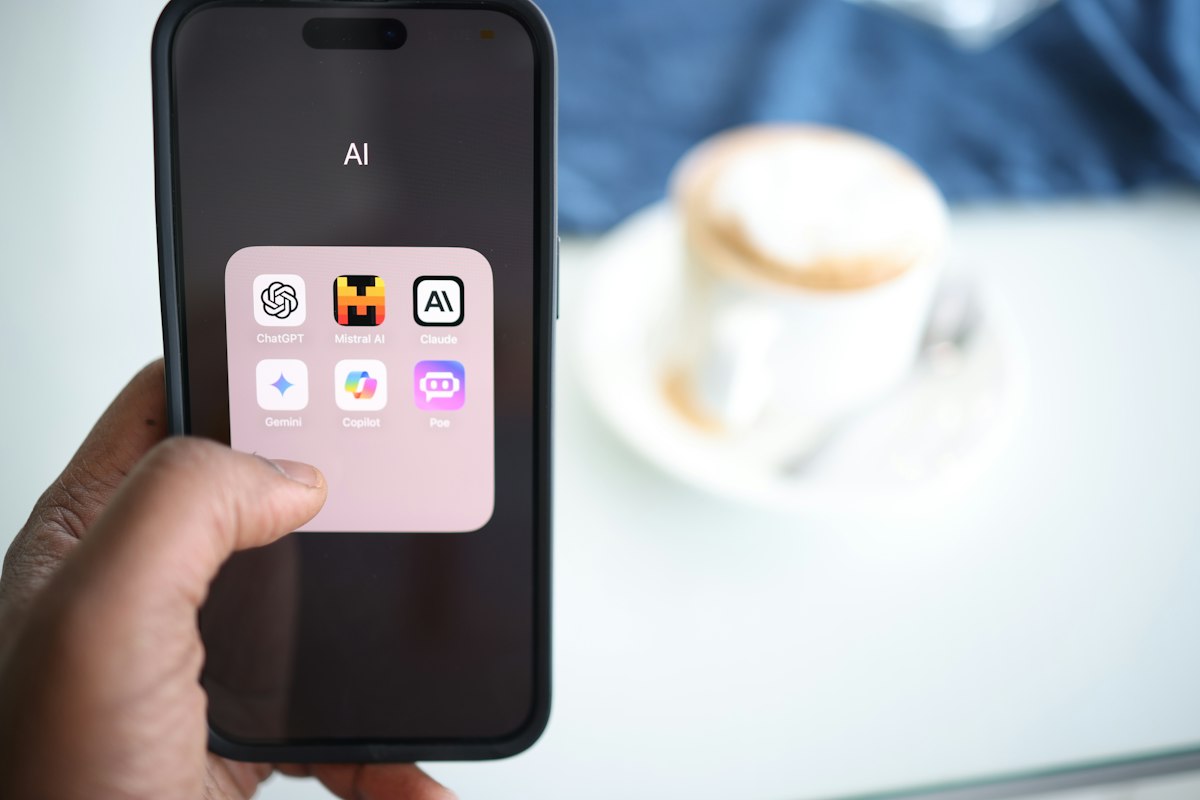
Getting cited by Claude, Gemini, and Perplexity requires three things: answer-first content, technical crawler access, and confirmed presence in trusted sources. Each model retrieves content differently. A strategy tuned for ChatGPT alone leaves gaps on the others. This guide covers what controls citations on each model and how to build AI visibility across all three at once.
What Controls Brand Citations on Claude, Gemini, and Perplexity
Three signals determine whether your brand appears in AI-generated answers.
Entity clarity. Each model builds an internal model of your brand. Consistent naming, clear category positioning, and structured data make that model accurate. Inconsistent signals produce missed or inaccurate citations.
Source confirmation. A single page rarely drives consistent AI citations. Models synthesise from multiple sources. Brands confirmed across their own site, review platforms, and editorial content cite more reliably. A single channel is not enough.
Content structure. Answer-first formatting, FAQ schema, and crawlable HTML improve extraction across all three models. JavaScript-dependent pages are often invisible to AI crawlers regardless of content quality.
How to Write Content That Gets Extracted
Answer-first writing is the most reliable technique for improving AI citation rates. LLMs extract from the beginning of passages.
- Open every section with the direct answer. State it in the first two sentences. Detail follows.
- Use claim, evidence, and implication. Make a specific claim. Attach supporting data immediately. Explain what it means.
- Add FAQ and HowTo schema. Structured metadata is read alongside raw text by all three models.
- Keep paragraphs tight. Short, specific chunks get extracted. Dense blocks get skipped.
- Cover comparisons. Perplexity and Gemini draw heavily on comparison-formatted content for recommendation queries.
For the full content engineering breakdown, see GEO content engineering: how to write content AI models cite.
Technical Access for AI Crawlers
Content quality does not matter if crawlers cannot reach your pages.
Check your robots.txt first. ClaudeBot (Anthropic) and PerplexityBot each need unrestricted access. Blocking either removes that model's citation opportunity entirely.
JavaScript-rendered pages are a persistent risk. Most AI crawlers do not execute JavaScript. Content rendered client-side is frequently invisible to these bots. Static HTML or server-side rendering for core pages removes this problem.
OmniGro's Dual-Layer Website Architecture serves an AI-only version of your site to these crawlers. Scripts, styles, and layout markup are stripped. Pages use up to 80% fewer tokens. Your human site is unaffected.
How Each LLM Cites Brands Differently
Claude, Gemini, and Perplexity do not share retrieval systems. Each has distinct behaviour that affects where you focus effort.
Claude draws from its training data plus real-time web retrieval in Pro and API contexts. It weights entity consistency and cross-source corroboration heavily. Brands with fragmented descriptions across the web cite less reliably, regardless of content quality.
Gemini has access to Google's index and Knowledge Graph. Strong organic rankings, structured schema, and a complete Google Business Profile all feed Gemini's brand understanding. Third-party editorial coverage and product schema are particularly valuable here.
Perplexity retrieves from live web sources at query time. Pages must be indexable, answer-structured, and within Perplexity's crawl pool. Raw crawlability and page accessibility matter more for Perplexity than for the other two.
A 2025 University of Toronto study (Chen et al., arXiv:2509.08919) confirmed these differences in controlled brand experiments across ten product verticals: Claude returned 87.3% Earned media, making it among the most conservative AI engines tested. Gemini was the most brand-leaning at 25.1% Brand and 11.5% Social alongside 63.4% Earned. Perplexity incorporated the most Social content at 23.8%, alongside 67.4% Earned. Each model draws from a different media ecosystem, which is why a strategy tuned for one platform underperforms on the others.
The shared foundation is consistent: clean content, a clear entity model, and confirmed third-party presence. Which model you prioritise first should depend on where your buyers search most.
OmniGro's Entity Consistency Monitoring tracks how your brand is described across every source LLMs draw from. It flags inconsistencies before they affect citations on any model.
Build Presence in Sources These Models Trust
Your own website is one input. Third-party sources often carry more weight.
According to Commerce.com, Gen Z shoppers now use AI platforms (33%) almost as much as search engines (37%) for product research. When they ask a question, the model synthesises from multiple sources simultaneously.
Sources that influence AI citations across all three models:
- Industry editorial pages such as "best X for Y" articles on category publications
- Product review platforms such as Trustpilot and niche category directories
- Reddit threads and community forums where buyers compare alternatives
- Brand directories and structured databases
Brands missing from these sources hold a structural citation disadvantage. A well-optimised own site does not compensate for absent third-party coverage.
Track Citations Across All Three Models
Citation frequency and share of voice are the core GEO metrics.
Citation frequency tracks how often your brand appears across a defined prompt set, per model. Share of voice shows your citation percentage against competitors for the same queries.
Per-model tracking matters because a gap on Perplexity does not show up in ChatGPT data. Cross-model measurement shows exactly where to focus effort and in what order.
OmniGro's AI Citation Tracking runs structured prompts across Claude, Gemini, Perplexity, and ChatGPT. It tracks citation frequency, share of voice, historical trends, and source attribution per model.
For brands starting from zero, a Brand Visibility Audit runs 200+ structured prompts across all three models and returns a prioritised GEO roadmap.
FAQs
Do Claude, Gemini, and Perplexity use the same sources?
No. Gemini uses Google's index and Knowledge Graph. Perplexity retrieves live web results at query time. Claude draws from training data plus real-time retrieval in its Pro tier. Each model requires a different approach to source coverage.
How quickly do AI citation improvements show results?
Early improvements typically appear within 2 to 4 weeks. Full citation authority builds over 2 to 3 months. GEO produces results faster than traditional SEO. It works on current content.
Does Google ranking help with Gemini citations?
Partially. Gemini uses Google's index as a grounding source. Pages that rank well and carry structured schema have a higher probability of appearing in Gemini's answers. Ranking alone is not sufficient. See GEO vs SEO: key differences in 2026 for the full comparison.
What is the first step to improve AI visibility?
Check your robots.txt. Confirm that ClaudeBot and PerplexityBot are not blocked. Then audit your entity consistency across all sources. Inconsistent brand descriptions are the most common cause of missing citations.
What is GEO and how does it relate to AI search?
GEO (Generative Engine Optimization) is the practice of optimizing your brand so AI assistants cite and recommend it. It covers Claude, Gemini, Perplexity, and ChatGPT. For a full explanation, see what is generative engine optimization.
How is this different from optimising for ChatGPT?
The fundamentals are the same. The retrieval systems differ. ChatGPT and Claude both use training plus real-time retrieval. Gemini is grounded in Google's index. Perplexity retrieves live. See how to appear in ChatGPT results in 2026 for a ChatGPT-specific breakdown.
References
- Chen, M., Wang, X., Chen, K., & Koudas, N. (2025). Generative Engine Optimization: How to Dominate AI Search. University of Toronto. https://arxiv.org/html/2509.08919v1
Conclusion
Getting cited by Claude, Gemini, and Perplexity relies on three foundations: structured content, technical crawler access, and confirmed third-party presence. Each model retrieves differently. Per-model tracking is the only way to see where you are missing. Start with access. Fix entity signals. Then close the source gaps one model at a time.